What Success Looks Like in Preparing for the Federal Fiscal Year-End
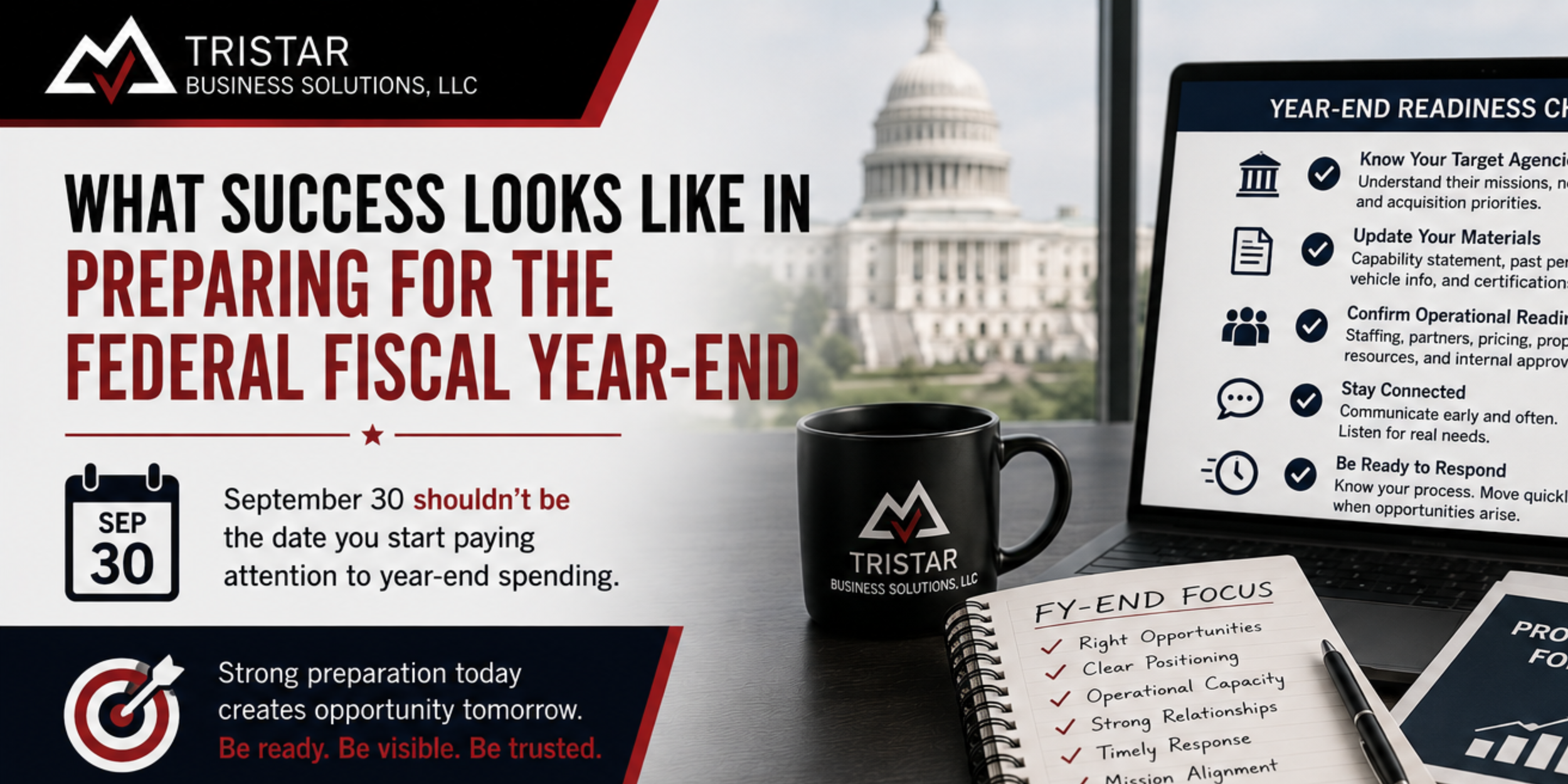
September 30 shouldn’t be the date you start paying attention to year-end spending.
The final months of the federal fiscal year can create significant opportunities for government contractors.
As September 30 approaches, agencies are working to execute acquisition plans, obligate available funds, address mission requirements, and complete purchases that have been developing throughout the year.
For contractors, that increased activity can be exciting.
It can also create a dangerous assumption:
“We’ll get ready when the opportunities start appearing.”
By then, you may already be late.
Successful fiscal year-end preparation is not about scrambling to chase every available dollar. It is about making sure your company is positioned, visible, responsive, and operationally ready when the right opportunity moves.
Year-End Spending Is Not a Starting Point
Federal fiscal year-end activity gets a lot of attention, but September spending does not happen in isolation.
Many requirements have been developing for months.
Agencies have been identifying needs, planning acquisitions, conducting market research, reviewing budgets, and communicating with industry throughout the year.
That means contractors should not treat Q4 as the beginning of their strategy.
It is often the point when earlier preparation starts to matter.
If your first interaction with an agency happens when a requirement is ready to move, competitors may already understand the customer, the mission, and the opportunity.
Know Where Your Company Fits
More spending does not automatically mean more opportunity for every contractor.
The goal is not to pursue everything.
It is to know where your capabilities genuinely align with agency needs.
Before year-end activity accelerates, contractors should have a clear understanding of:
The agencies they are targeting
The problems those agencies are trying to solve
Their relevant capabilities and past performance
The contract vehicles available to the customer
Their realistic capacity to perform
The opportunities worth pursuing
A focused contractor is usually better positioned than one trying to respond to everything.
Make It Easy for Agencies to Understand What You Do
Year-end is not the time for unclear positioning.
Contractors should be able to communicate quickly and clearly:
What do you provide?
Who have you done it for?
Why are you qualified?
How can the government buy from you?
Capability statements, relevant past performance, contract vehicle information, certifications, and points of contact should be current and easy to access.
When timelines become compressed, clarity matters.
The easier you make it for a potential customer to understand your capabilities, the easier it is to determine whether your company belongs in the conversation.
Confirm Your Operational Readiness
Being able to win work and being ready to perform it are two different things.
Before pursuing accelerated year-end opportunities, leadership should understand whether the organization has the resources to execute successfully.
Consider:
Staffing availability
Supplier and partner capacity
Pricing readiness
Proposal resources
Internal approval timelines
Compliance requirements
Delivery schedules
Winning an opportunity your organization cannot properly support is not a successful year-end strategy.
Long-term credibility matters more than short-term volume.
Stay Close to the Customer
Strong year-end positioning also depends on communication.
This does not mean flooding contracting officers with generic sales messages because September is approaching.
It means maintaining relevant relationships throughout the year and understanding where genuine needs exist.
Listen carefully.
Pay attention to procurement forecasts, agency communications, industry days, market research activity, and conversations with customers.
When you do reach out, make the conversation useful.
The objective is not:
"Do you have money left to spend?"
It is:
"We understand what you're trying to accomplish, and we're prepared to help if our capabilities align with the requirement."
That is a very different position.
Responsiveness Matters When Timelines Compress
As fiscal year-end approaches, some acquisition timelines can become tighter.
Prepared contractors have an advantage because they are not assembling everything from scratch.
They already know:
Who needs to respond internally
What information is required
Where supporting documentation is located
What approvals are needed
Whether the opportunity fits their strategy
Preparation allows the company to move quickly without becoming careless.
Speed matters.
But prepared speed is very different from panic.
Don't Let September Distract You From October
There is another part of fiscal year-end planning that is easy to overlook:
The next fiscal year begins immediately afterward.
Strong contractors do not spend all of their energy chasing September opportunities and then disappear in October.
They are already thinking about:
Future agency priorities
Procurement forecasts
Upcoming recompetes
Pipeline development
Relationship-building
Lessons learned from the previous year
September 30 is a deadline.
It is not the end of the federal market.
What Success Looks Like
Successful fiscal year-end preparation means your company is:
Focused on the right agencies and opportunities
Clear about its capabilities
Easy for customers to understand
Operationally prepared to perform
Connected to relevant agency needs
Ready to respond when timelines accelerate
Disciplined enough to walk away from poor-fit opportunities
Already thinking beyond September 30
The objective is not to become busier.
It is to become more prepared.
Final Thought
Federal fiscal year-end can create opportunity, but increased activity does not replace strategy.
The contractors best positioned for Q4 are often the ones that did the work before Q4 arrived.
They know their market. They understand their customers. Their materials are ready. Their teams know how to respond. And they have the discipline to pursue opportunities that actually fit.
September 30 may create urgency for the market. It shouldn't create chaos inside your business.