Winning the Contract Is Not the Hard Part
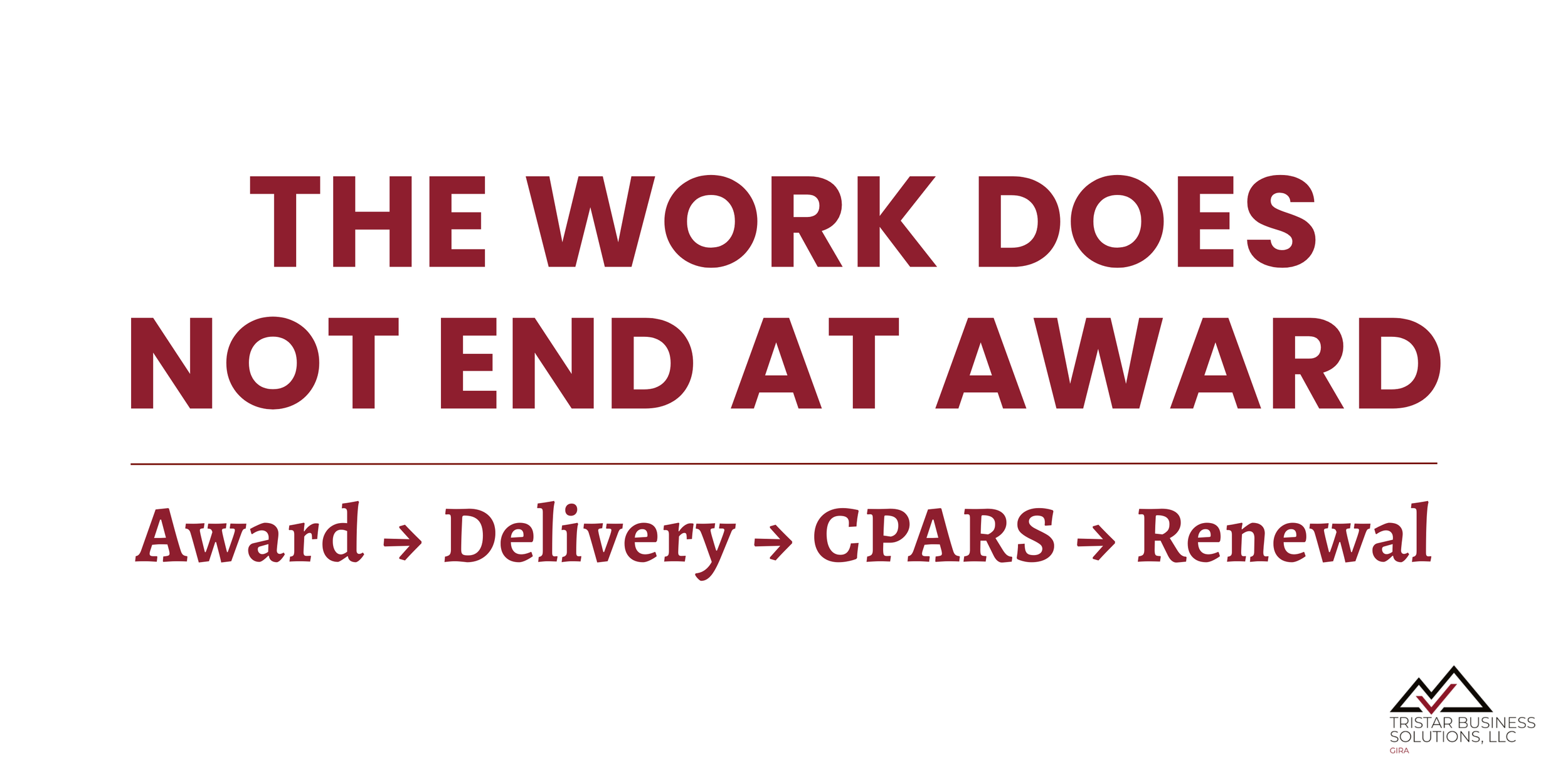
Winning a federal contract feels like the finish line. The proposal is submitted, the award is announced, and teams move on to the next opportunity.
But for many contractors, this is where growth begins to break down.
Federal buyers are not only evaluating who wins contracts. They are watching what happens after the award. Delivery discipline, communication, and follow-through shape whether a contractor earns repeat work or quietly fades into the background.
Many organizations underestimate this phase.
The Post-Award Gap
Most federal sales processes are built around capture and proposal development. Once the contract is awarded, responsibility shifts quickly to delivery teams, often with limited alignment to what was promised during capture.
This creates gaps:
Commitments made in proposals are not always operationalized
Communication becomes reactive instead of proactive
CPARS is treated as a future concern instead of an ongoing priority
From the buyer’s perspective, this introduces risk.
Buyers Remember the Experience, Not the Pitch
Federal buyers remember how easy or difficult it was to work with a contractor. They remember whether issues were handled early, whether reporting was clear, and whether the contractor took ownership when things did not go perfectly.
These experiences influence future task orders, extensions, and recompetes far more than proposal language.
Winning once does not create momentum. Consistent execution does.
Growth Is a Post-Award Discipline
High-performing contractors approach post-award execution intentionally. They align delivery teams with capture commitments. They track performance indicators before CPARS reviews. They treat communication and responsiveness as part of their growth strategy.
This discipline reduces buyer effort. Reduced effort builds trust. Trust drives repeat work.
A Simple Shift That Matters
Instead of asking, “Did we win the contract?” high-performing teams ask, “Did we earn the next one?”
That mindset shift is often the difference between stalled pipelines and sustainable federal growth.